

CTE needs exploration and hands-on learning
Finding a career path is like finding the right clothes, John Pellman argues. Changing pathways is not a sign of failure but experimentation and growth.
by John Pellman
“Now you’re just hurting kids.”
Five years ago, a former colleague leveled this accusation at schools that don’t push students to finish a three-year CTE Pathway. She insisted that once a student starts a pathway, they must complete it—regardless of whether they lose interest or want to try something entirely different. Perhaps she believed that by forcing them to stick with it, she was teaching them accountability and follow-through. Or maybe she believed that enduring something you dislike is a necessary life skill.
I could not have disagreed with her more. Resilience is a life skill, certainly, but forcing compliance is a terrible way to teach it.
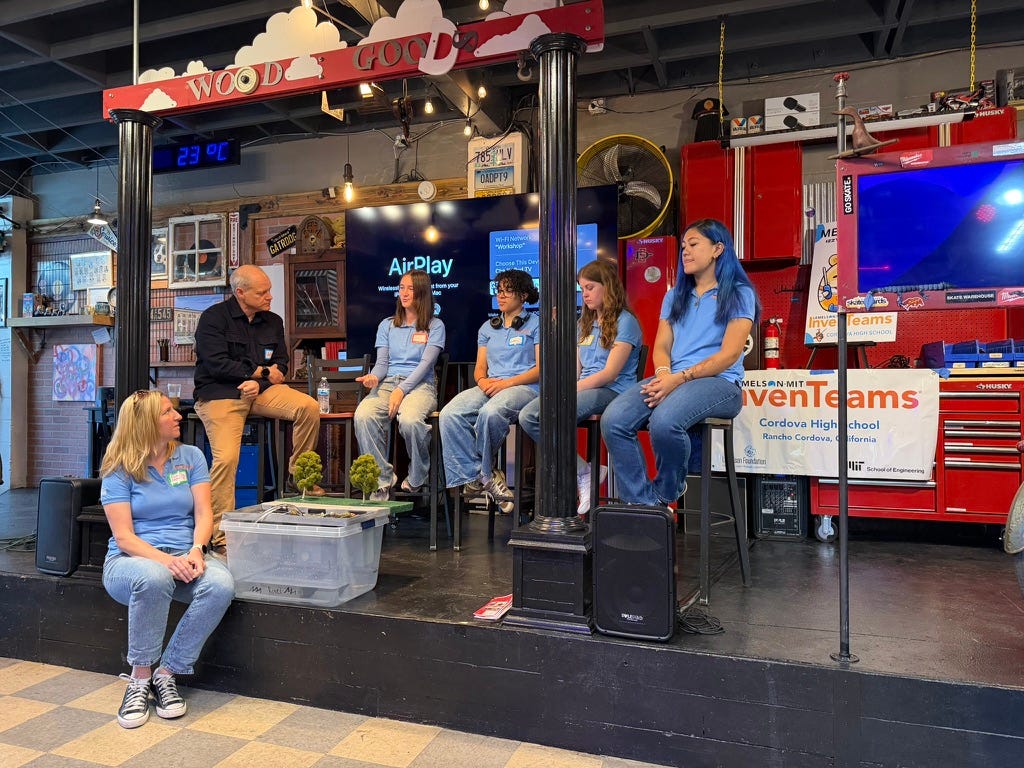
Changing your mind is not failure - it’s growth
When a student loses interest and wants to pivot, that isn’t a failure; it is the sign of a curious mind. It means they are actively engaged in self-reflection and possess the courage to act on it. Sure, a student who constantly jumps from thing to thing might lack focus, but two things can be true at once: sometimes a lack of follow-through simply means they haven’t found what drives them yet.
Developmental psychologists Wim Meeus and Koen Luyckx write extensively about the dual need for breadth and depth in adolescent identity formation. Once a teenager makes a tentative choice—like “I think I’m a science person” or “I want to try graphic design”—they don’t stop there. They dive into in-depth exploration, actively testing that identity against reality: “Do I actually value this? Am I good at it? Are these my people?” If the choice passes the test, they commit. If it fails, they drop back into broad exploration to look for better options.
Finding a career path is like finding the right clothes
I describe this to my students as trying on clothes. Exploring career paths is like wearing a new outfit. If you look in the mirror, feel confident, and like who you see, you buy more clothes in that style. If it doesn’t look right, you don’t buy the whole wardrobe just to prove a point—you try on a different outfit.
Why was my colleague so convinced she was right? Was it her personal history, or was she simply responding to systemic incentives? The Department of Education heavily rewards districts for churning out pathway “completers” (a key metric on the California School Dashboard). On paper, schools look like they are doing their jobs when completion numbers are high. My colleague was doing exactly what the educational bureaucracy told her was the goal. But to me, prioritizing a spreadsheet metric over human development felt wrong.

What I’ve learned listening to students
Five years have passed since that conversation. In that time, I completed my doctoral program, focusing my dissertation, Why Am I Here, on how we build genuine purpose into education by integrating career exploration into high schools. I also left that large school district to become a founding member of a start-up charter school explicitly committed to career education.
After three years and hundreds of conversations with students in this new environment, one thing is clear: most kids don’t actually know what a career path looks like, and there is absolutely nothing wrong with that. I routinely speak with eighth and ninth graders who confidently declare, “I want to be an NFL player,” “I want to be an actress,” or “I want to be a neurosurgeon.” Yet, after getting to know them, you quickly realize they don’t work out, have never taken an acting class, and can’t stand science. I will never tell a kid they can’t do something; given the space to explore, they usually arrive at those realisms on their own.
Students are searching for the right outfit. They want an identity that excites them, but they don’t know what they don’t know. When we blanketly tell kids “you need to go to college” without context, they parrot it back without ever asking why college is right for them or how it connects to their future self. Kids don’t need rigid pipelines; they need to explore, get confused, ask questions, and explore some more.
This is where hands-on learning becomes vital
Consider two different classrooms. In the first, students are handed worksheets and told, “Read this, answer these questions, find the single right answer.” In the second, students have tools in their hands. They are told to apply concepts, make physical connections, and figure out how systems work. The first model demands compliance: “Do this because it will help you later, even if you hate it now.” The second model honors agency, allows for choice, tolerates multiple “right” answers, and sparks curiosity.
Discovering a career path is fundamentally a constructivist activity otherwise known as Career Construction Theory. Human beings make meaning out of the things they physically experience and the people they meet, measuring those experiences against who they believe they are. School curricula must teach core concepts, but they must go one step further by allowing students to physically apply what they learn.
Without hands-on application, students never get the chance to look in the mirror and see how an identity fits. When we deny them the freedom to take off an outfit that doesn’t fit, we aren’t teaching them commitment. We are just hurting them.
Dr. John Pellman started his career in education in 2005. He’s been substitute, Special Education, Arts Media and Entertainment teacher, academy coordinator, district administrator and is now a founding member of Capital College & Career Academy in Sacramento where he is the Director of Curriculum and Instruction. His dissertation, Why Am I Here, focuses on integrating career and secondary education. Dr. Pellman is huge advocate for hands-on learning in all subjects.
See also, this panel discussion with John Pellman as one of the panelists:
Talking Shop with NorCal Maker Educators

One of the strengths of maker movement is the range of different places where you can find makerspaces — museums and science centers, libraries, community colleges and universities, and in K-12 schools. There are also makerspaces rooted in neighborhoods, like