

Visualizing Teacher Movement in a Makerspace
"Movement functions as a form of pedagogy rather than a logistical necessity"

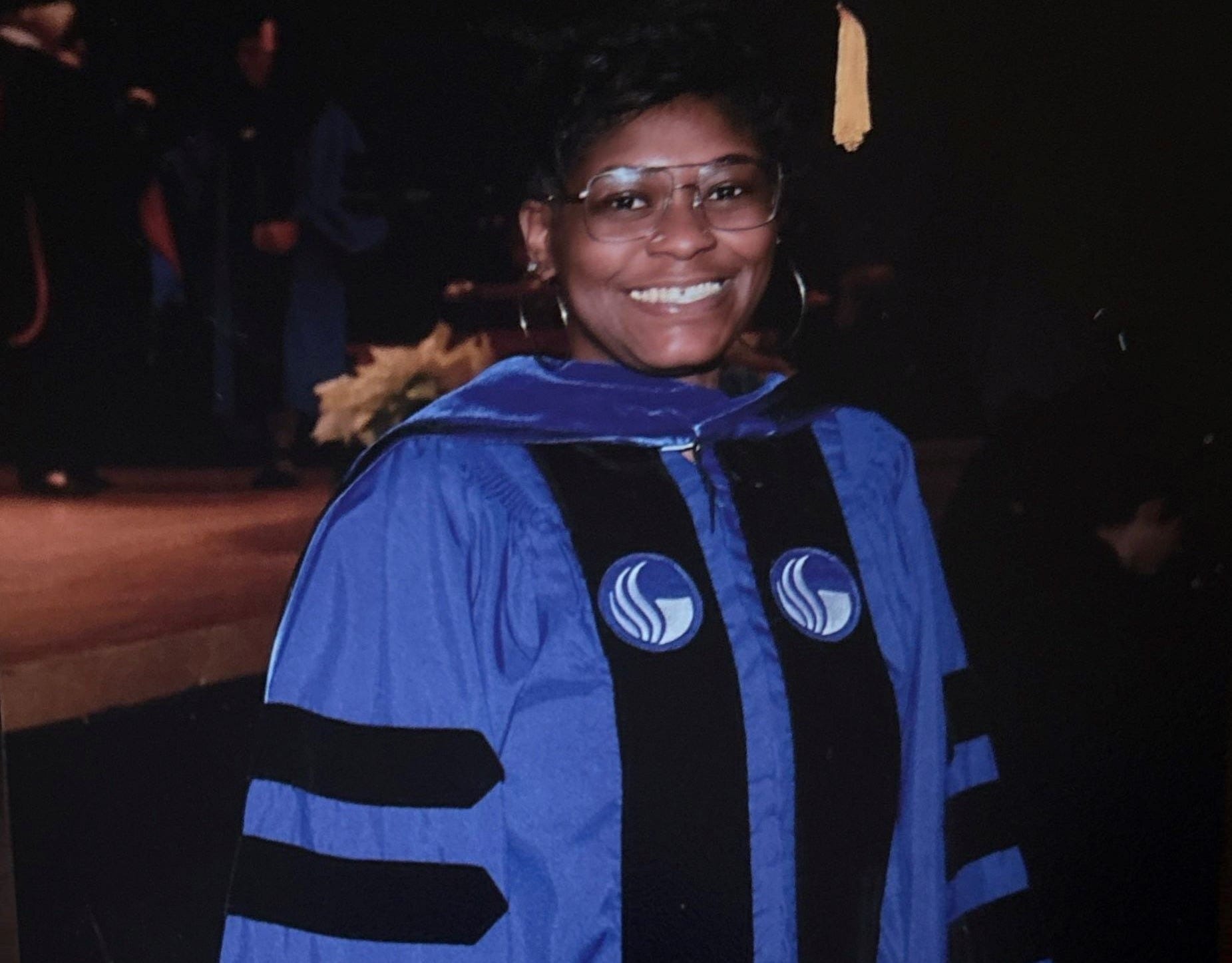
Sierra Gilliam got her PhD in Instructional Technology from Georgia State in December. “I’ve been a doctor for, what? About two, about three weeks now,” she told me when we spoke earlier this month. Dr. Gilliam did her dissertation studying how teachers move in a makerspace classroom, utilizing software to trace that movement on a layout of the classroom. She believes that teachers are not aware of how their own movement in the classroom space affects student engagement and agency.
“One of the ideas I had around makerspaces originally was the importance of teacher movement; they’re not sitting in desks, they’re not stationary,” she said. “They are moving around. They’re interacting with students. They’re often standing up as opposed to sitting down. I always thought that had a lot of benefits to embodied engagement. The idea of teacher movement is just as important as it is to students.”
Her study is limited to one college-level makerspace classroom over four sessions. The the open-source tools Dr. Gilliam uses were developed by Ben Rydal Shapiro (her Ph.D. supervisor) and others. (See links below to Dr. Gilliam’s dissertation and the software she used.)
Studying patterns of movement in a makerspace is a really interesting idea. Unlike a traditional classroom, where students are usually seated, a makerspace is more like a gymnasium where students are moving around and doing things, and often the teacher or coach is moving with them.
Q&A
Q. Let me ask you, how did you encounter maker education?
I founded the first drone technology program in Guilford County Public Schools in Greensboro, North Carolina. My academic background is in Earth Science, Geographic Information Systems (GIS), and Remote Sensing, and during my master’s program I gained extensive hands-on experience working with drones. I quickly fell in love with the practice and became eager to share that knowledge with students.
I approached my classroom as a makerspace, incorporating 3D printers so students could design and fabricate drone parts and build their own systems. By adopting maker education principles and integrating them into my teaching methodology, I transformed traditional instruction into a hands-on, student-centered learning environment. It was through this experience that my pathway into maker education truly began, opening new doors for both my teaching practice and my research journey.
I worked with high schoolers and helped them obtain their FAA Part 107 certification by the time they graduated. Not only did they have a diploma, they’d have their Part 107 to fly drones legally which puts them in the position to do some entrepreneurial work.
Q. So you are teaching and you decide to go back to school and and get a PhD at Georgia State?
Yes, correct. I also taught AP Computer Science. I taught AP Computer Science A and AP Computer Science Principles. It was a good thing that I was based at the first North Carolina Capstone program in Greensboro, North Carolina. We wanted to incorporate drone technology and logistics. I was just intrigued. How can I adopt GIS with education? I already had my research topic in mind as I was teaching.
I just took a leap of faith in going back to school. It was around COVID-19, which had just hit right when I got in my program. I applied to Georgia State and they accepted me. I was really excited to get my research up and going.
When we look at what teachers can learn from their own practice, we don’t hear too much about their physical movement. You’re just pretty much observing other teachers and doing that basic type of observation practice. I was a first time teacher and had no idea what was going on in the classroom. I got thrown in the class and told: “Hey, just go for it.”
My background in Geography and GIS really shaped my research, which looks at physical movement as a spatial pedagogy. How can you adopt spatial practices in the classroom, how can that help a teacher grow, and how can that be applied to ethical support when it comes to students?
A makerspace classroom is very organic. Students are learning on their own. Their autonomy is a part of their learning. And so just the aspect of using your physical movement in the classroom was very intriguing to me.
Q. How did you study these teachers moving around? How’d you do it?
There were three teachers in a university-based makerspace classroom. One was the primary professor and then there were two graduate assistants that taught the course. The course taught undergrad and graduate students together. I focused on how the teachers coordinated their movement simultaneously in the classroom and how that movement not only supported student learning, but how that movement helped them engage with each other.
In a makerspace classroom, there’s a lot going on between students and teachers, right?
We had GoPro cameras set up in the classroom and we could see different angles of the teachers. I actually used Interaction Geography, which is an open-source tool developed by Dr. Ben Rydal Shapiro and others. I took the video data of each teacher. I actually manually transcribed each teacher using Mondrian Transcription (MT). Then I used the Interaction Geography Slicer (IGS) to analyze it. Both pieces of software are housed under Interaction Geography.
I immersed myself in that video data and followed that teacher around for a total of four classes. I also built out the floor plan of that makerspace classroom and I actually traced each teacher movement for the whole entire class period. I was able to see how all three of them were able to coordinate their movement in one space.
Description: This animation video shows the movement of a teacher across a 2hr and 24 minute lesson in a maker-based classroom. The floor plan shows the arrangement of tables and artifacts as well as students’ positions at the beginning of the lesson. The teacher’s movement is shown as a purple path over the floor plan and upwards in a space-time view. In the space-time view, the z-axis is time, and the x/y axes correspond to the floor plan. Stops longer than 10 seconds are depicted as purple circles on the floor plan, the area of which indicates the duration of the stop. In the space-time view, stops are shown as thick, straight lines whose length indicates stop duration.
Built with: https://www.interactiongeography.org
Q. Were you able to detect patterns?
Yes, specifically through body gestures, circulation patterns and their positioning patterns. This all falls under subconscious movement. With my research I can reveal these unknown patterns through a space-time view. Now teachers are able to see how their movement patterns are fostered and how student agency emerges through subconscious spatial practices.
Q. How does teacher movement impact that?
Teacher movement shapes student participation, equity, and access in ways that often go unnoticed. For example, a student may receive limited one-on-one interaction with the teacher without the teacher realizing it. A learner who is struggling in the course may not be receiving the instructional support they need, not due to neglect, but because of factors such as classroom layout, movement patterns, or the student’s reluctance to ask for help.
When educators refocus their practice through an equity lens, the goal becomes ensuring that every student has access to the same meaningful and impactful learning experiences. Using an observation framework centered on teacher movement allows educators to identify patterns related to spatial awareness and interaction practices within the classroom. This insight creates an opportunity for teachers to reflect more critically on their pedagogical decisions and instructional habits.
Studying teacher movement has important implications for teacher education and K–12 preparation programs. Regardless of subject area, becoming intentional about spatial pedagogy can reduce instructional stress, increase classroom awareness, and strengthen teaching effectiveness. This type of research supports teacher education across disciplines by highlighting how intentional movement can foster more equitable, engaging, and inclusive learning environments.
Q. Do you come up with recommendations that teachers can follow to be more aware of their movement and the benefits?
Most teachers are not typically focused on where they are positioned in the classroom. Movement often happens naturally whether that’s standing in the authoritative space at the front of the room or occupying a supervisory space while monitoring student activity. These practices are common and often unconscious parts of teaching.
However, my research shows that becoming aware of one’s spatial patterns and intentionally coordinating movement can significantly shape how students experience learning. Purposeful movement can influence engagement, access to support, and student confidence. Even simple shifts in positioning help students recognize that the teacher is present, attentive, and available, reinforcing both instructional support and a sense of connection within the classroom.
Q. Did anything surprise you?
Several unexpected surprises emerged from my work which deepened my understanding of teacher movement and spatial pedagogy. One of the most surprising discoveries was that while teachers believed they were circulating equitably, visual analysis revealed consistent clustering in certain areas of the classroom. The physical layout such as furniture placement, tool stations, and technology zones strongly influenced where teachers traveled and how long they remained in specific spaces. As a result, some students received more instructional interaction simply due to where they were located, rather than their academic needs. These inequities were unintentional but measurable, particularly affecting students who were quieter, less likely to seek help, or positioned outside common movement pathways.
The findings also demonstrated that teacher movement directly shapes student participation and engagement. Physical proximity increased students’ willingness to ask questions, persist through challenges, and remain engaged in learning activities. This reinforces that movement functions as a form of pedagogy rather than a logistical necessity. In maker-based classrooms, these patterns were often amplified due to open layouts and high-traffic areas, which naturally drew teachers attention.
However, when teachers are able to visualize their movement they can immediately recognize patterns they had never noticed before. This revealed that making movement visible can prompt powerful pedagogical reflection, supporting more equitable access to instruction across maker education environments and traditional classrooms alike.
Q. Have you gotten any response from others about your research?
Outside of attending educational conferences and research symposiums, I have not shared much of my work since graduating. So far, you are the first person I’ve spoken with about it.
My research is deeply meaningful to me, and I would love for both public and private school districts along with administrators and district officials to recognize how useful this support can be for teachers. We have developed a free, open-source tool that any educator can access. While it can be applied effectively in maker education classrooms, teachers in all subject areas can benefit from its use.
I would be more than honored to share my research with anyone who is interested.
Q. Would it be possible for let’s just say a district with three makerspace and you wanted to do a study on your own, could they use these tools?
Yes. Interaction Geography is public software that’s available for anybody. All you need is your video data and floorplan.
If you’re in your own classroom, you can record yourself for that whole class period. You can use Powerpoint, Adobe or Keynote to create your class floor plan. You can get really creative with that.
Now all you have to do is pop your video and floor plan file into the Mondrian Transcription and from there you can manually transcribe the teacher movement. Once your movement is transcribed you can download the CSV file and put everything into the Interaction Geography Slicer to visually analyze the movement over your floor plan.
Q. Anything else to add?
As a recent graduate, I am actively seeking professional opportunities and meaningful connections within the maker education community. I am especially interested in networking with educators, school districts, and organizations who are committed to innovative, equity-centered teaching practices. I hope to share my research and classroom experience at maker education conferences and collaborate with districts interested in applying this work to support teachers and enhance student learning.
Visualizing Spatial Pedagogies in a Maker-Based Classroom: An Interaction Geography Perspective (link) by Sierra Gilliam.
Interaction Geography software website.