


I was talking yesterday to a local non-profit leader about education. I said that in the 1990s there was a lot more public discussion around innovation in education. Today there is very little, especially as school districts are struggling with declining enrollment and structural deficits. Schools haven’t changed much.
At the end of our lunch, he asked what could be done. He asked if it made sense to convene people around the future of education. I have been to many conferences and spoken at some of them and I know that inspiring talks about education seem to result in little or no change. Everybody goes back and does what they’ve been doing.
I had told him about the Academy of Innovative Arts, a public “choice” high school in its second year. Under the auspices of MakerEd, I’ve built out the makerspace for the new school. But it’s not a finished school, by any means. It is a model, a work in progress, one that needs many more iterations. When you visit, however, you feel that it is a different kind of school; you see students engaging with each other in a makerspace filled with tools, work benches and materials.
What I told this community leader at lunch is that I had to build a model of new school so others could see it in action. I invited him to bring others to see it for themselves. I added that we need new models to replace the old models that aren’t working. We don’t have the time to just be talking about change. A model is a prototype that instantiates a set of new ideas. Rather than convening people to talk, I’d rather have them experience a prototype and react to it.
I realized that I’ve been building models for most of my life. Maker Faire is a model for an event; we created the first in 2006 but now 20 years later, there are hundreds of Maker Faires around the world in a year. Back in 2012, we built model makerspaces and wrote a playbook on how to build them in other schools.
Starting makerspaces in 2012
I thought back to one of my first efforts to bring maker education to high schools. I created a makerspace in the Make: office and worked with the local high school to offer a maker class. The students walked up from the high school and I was lucky to have a really good teacher, Casey Shea, organize the class and the makerspace.
I remember two things about the class. One was that all the students were working on different projects, some of them in groups, and there was such a nice “buzz” or “hum” in the space. To someone used to traditional education environments, they may have expected it would be chaos with students working on their own but it was not chaos. Students were interacting with each other while busy with their own work.
The second thing was that we invited administrators to visit the makerspace while the students were at work. We didn’t give them much of an explanation of what we were doing, or what a makerspace was. We let them see what was happening, meet the students and see the work they were doing. So many of the administrators said something like: “I have students who would benefit from this.” (No one asked if it improved student test scores. Not a one.) They got to see the model of a makerspace in action and they could begin to think on their own about how to create one.
I should add that Casey Shea invited other teachers to visit the makerspace. A group of educators, largely on their own, began organizing makerspaces at their schools. It was a very informal spread of best practices, but again, it really helped when educators could see an existing model and then build their own.
In 2012, Dr. Sanjay Gupta visited the makerspace at our office and filmed a segment for “The Next List” on CNN.
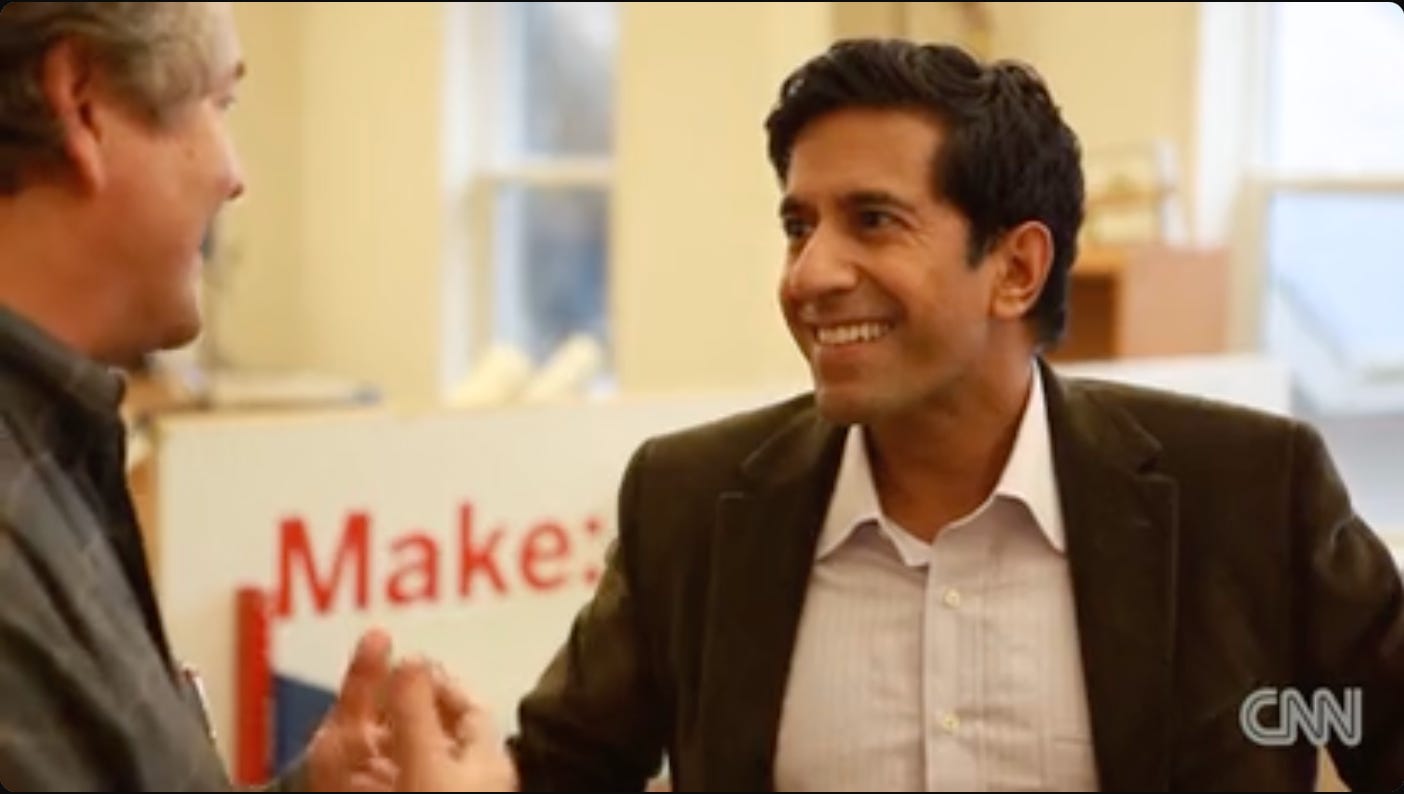
Link: https://www.cnn.com/videos/living/2012/02/23/the-next-list-dale-dougherty-2.cnn
Dr. Gupta asked me if the goal was to have innovators and innovation to be taught in every school. I replied that I did but:
“I want (innovation) to be experienced. It’s not something you tell people — to innovate. It’s like creativity. You don’t tell people to be creative. You invite them to (create) and you open up a context for them to do that. So it becomes something that resonates inside of them, not something you impose on them.”
That was 2012. What followed was an amazing rise in the building of makerspaces in schools through that decade, up until Covid shut down schools and closed makerspaces. Many have never recovered. The equipment is still there, perhaps, but many schools no longer have the educators who were the champions of makerspaces. In other cases, the makerspace remained available but the students didn’t get much time to work in it. School priorities changed and somehow the focus returned to caring more about test scores again, even though such renewed efforts have not actually improved test scores. Meanwhile, students express an increasing dissatisfaction with traditional education.
What seems necessary is to focus on students, not standards and systems. Creating makerspaces can be relevant again: creating a supportive environment that encouraged student learning, exploration and experimentation. You also have to connect with the students who are not well served by the old model and convince them to try out this new model. I called the these students “the C students,” bored by school, not motivated by going on to college, and looking for alternatives that offered them more choice and different outcomes. They were tired of being told they had to do something and when they asked why, the only answer was that they needed it to go to college.
Students want to learn and have new experiences, just like previous generations. I’d argue they are even hungrier for it. However, they don’t necessary want to learn in the way they are being taught. “Learn by doing” is something everyone can understand but schools don’t really embrace learning as much as they embrace packaged curriculum.
I want to keep arguing that schools need to revisit how makerspaces can be used to transform student engagement and student learning, reaching students that they are not serving well today. We need to re-evaluate what real-life challenges students in 2026 are dealing with and how makerspaces can help students navigate these challenges with adult and peer guidance in the practice of learning, making and innovating.
Back in 2012, I thought I’d see that the introduction of makerspaces would naturally lead to the development of maker schools. I began looking for an opportunity to build a new high school around a makerspace. About three years ago, I began working with the Superintendent Chris Meredith in the District where I live. Eventually, we opened the Academy of Innovative Arts last year for 9th graders on the campus of a high school that had been closed in 2021. Fortunately, it had unused space that was ideal for a makerspace.
Academy of Innovative Arts Model
The main goal I had in the design of the Academy of Innovative Arts was to make a makerspace the centerpiece of student learning in high school and to make sure students got to spend enough time in the makerspace each day to develop new skills and also have the opportunity to do projects based on their own ideas and interests. Because we are a public school, we have to work within a fairly standard bell schedule and there are limits in how flexible we can be. As a general model, students take academic classes in the morning and then they work in the makerspace in the afternoon.
This alternative hands-on public high school started its second year last month with a new class. Now we have about 40 students. What’s different about this year’s students is that more of the new class chose the school because of what the school offers. They were able to visit the school last year and decide if its hands-on approach resonated with them.
When asked how the school is going, I will say it’s “going well.” But I also see what’s not going well, and I must admit acknowledge how hard it is to start a school from scratch, especially a public school with limited resources. AIA is not perfect, but it is up and running and we can continue to make it better based on the feedback we get. What we have learned is that the makerspace is where students want to be.
Sarah Chung, Makerspace Manager
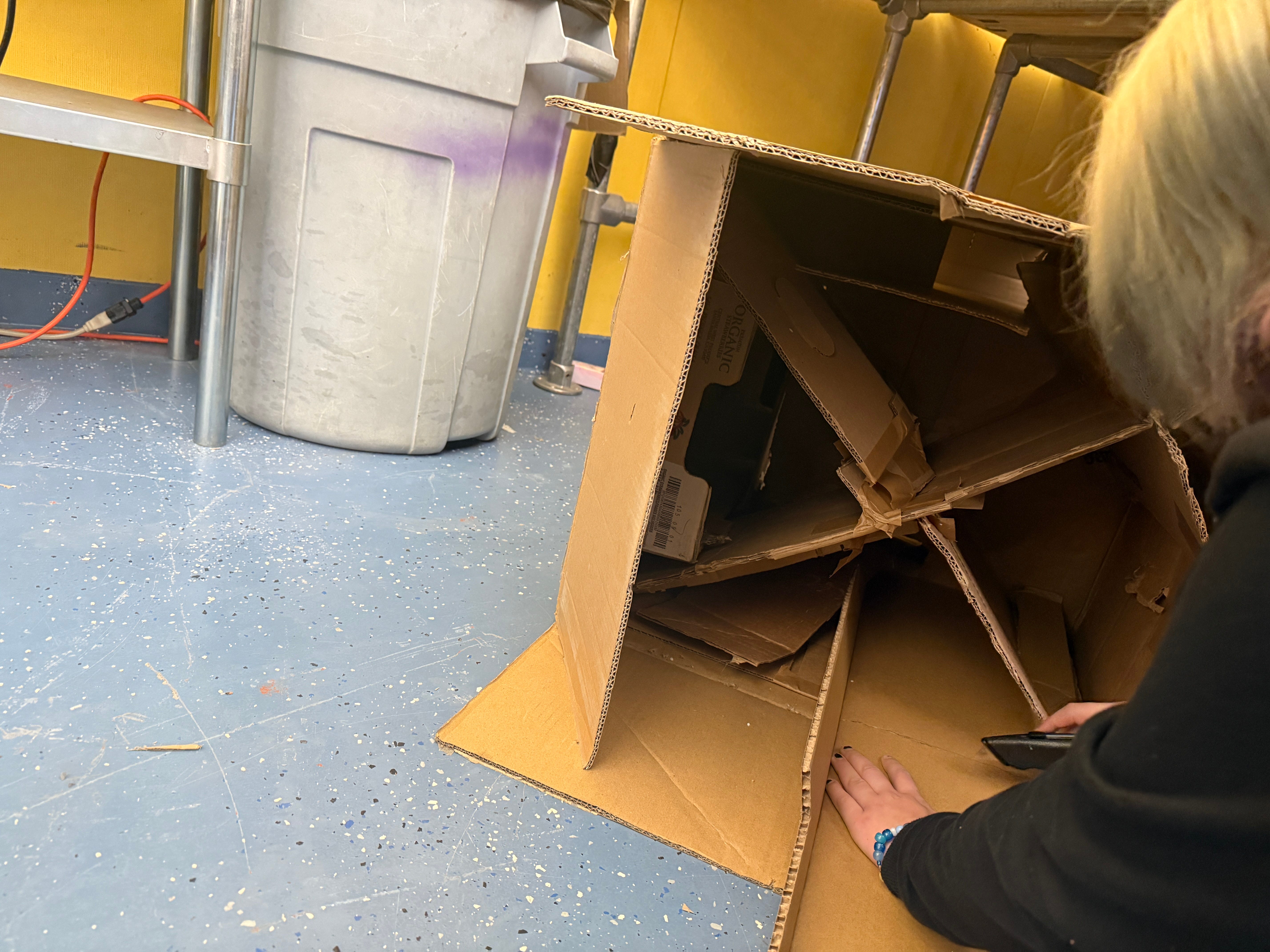
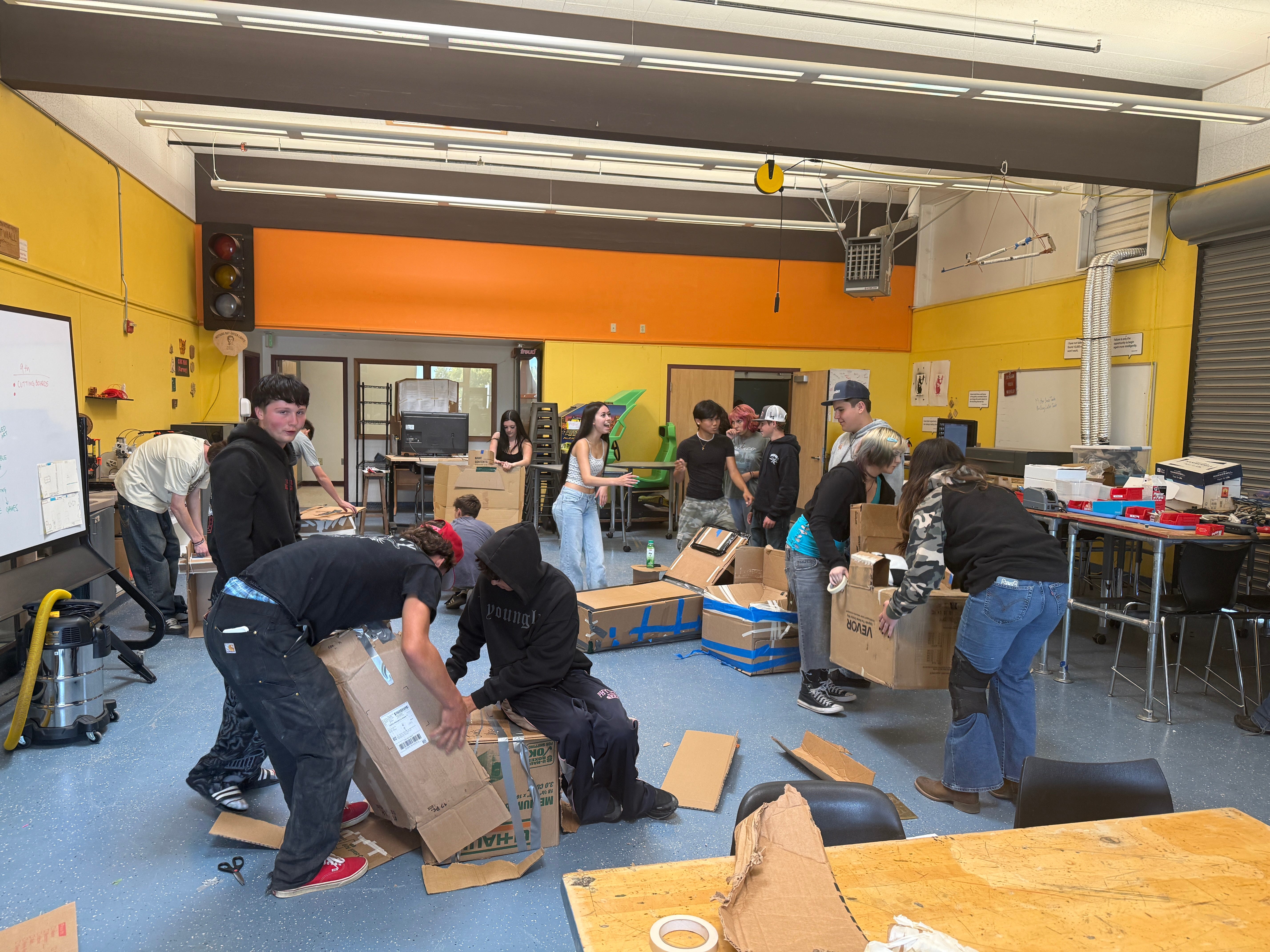
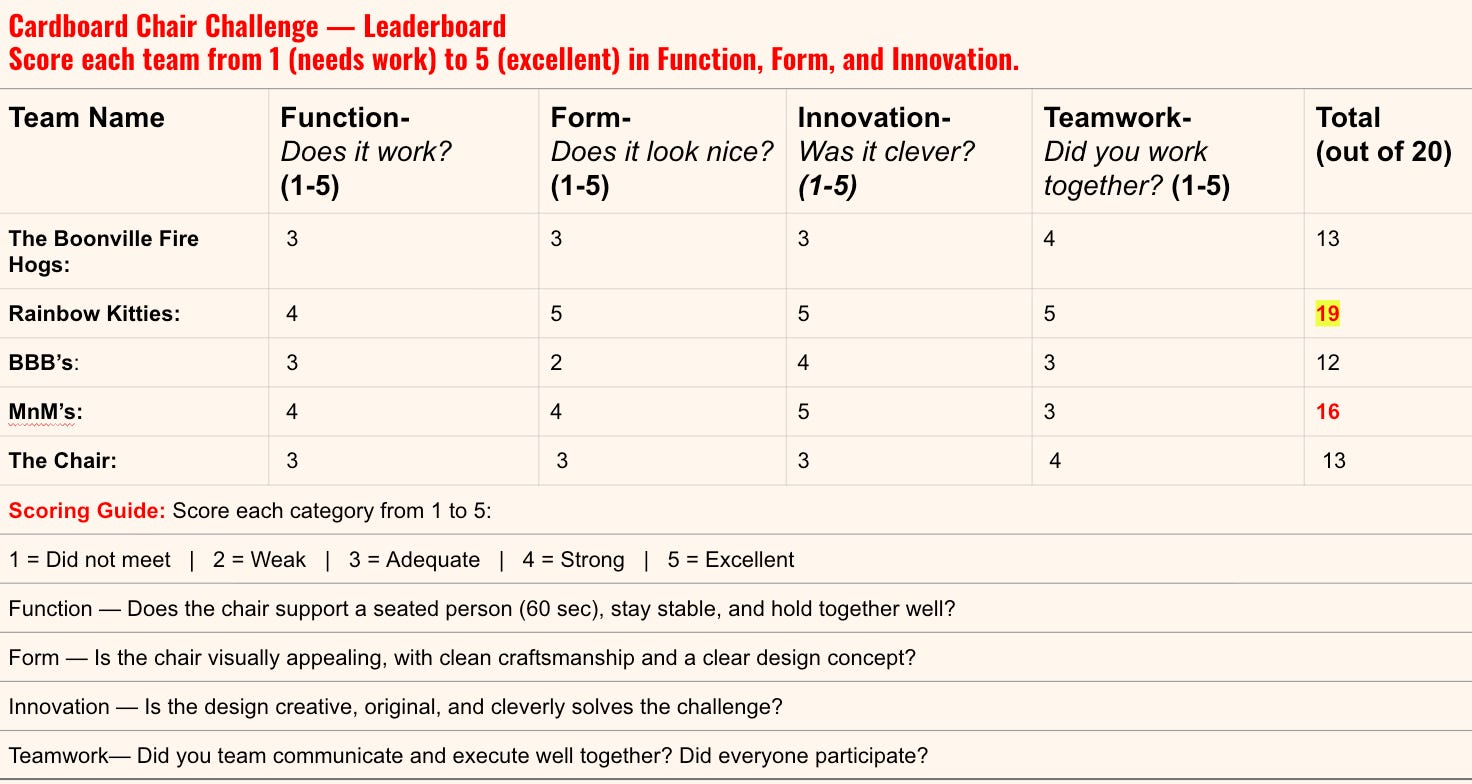
Maker educator Sarah Chung has joined MakerEd to work with students and manage the Innovative Arts makerspace this year. This week during the 10th grade Innovative Arts block, she gave students an engineering challenge to build functional chairs out of cardboard. It was also a challenge to get our second-year students working together in randomly assigned teams. While they were not graded on this activity, they were presented with a scoring/judging criteria and they evaluated the chairs as a whole class.
Teacher Cole Smith’s Wood and Metal Shop
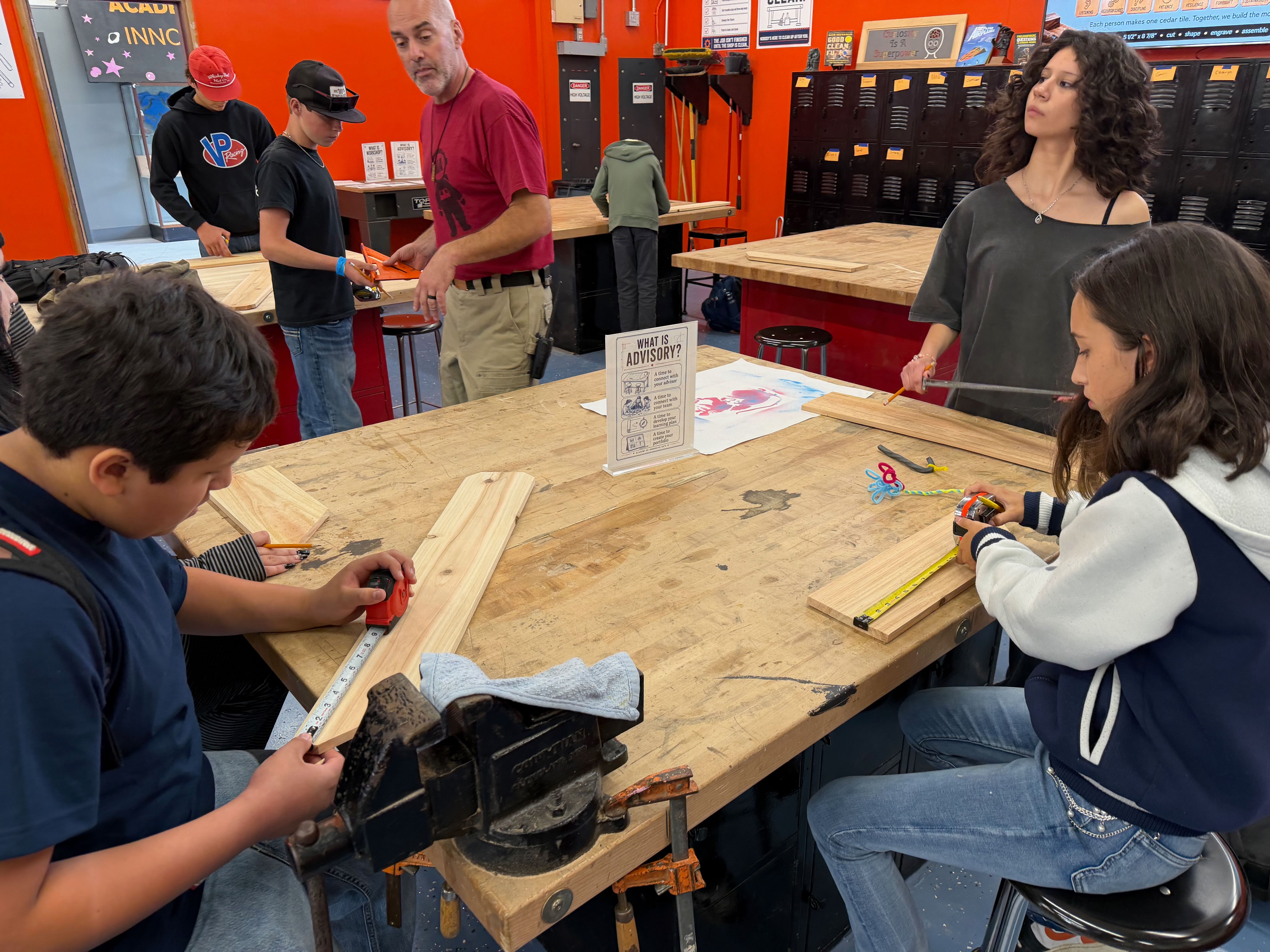
What’s new this year is that our makerspace has a dedicated wood and metal shop. Cole Smith gave our new space plenty of love, getting it in shape for the school year. He has been teaching shop class in some form for twenty years, and at AIA, he is teaching World History, PhysEd and the Innovative Arts workshops.
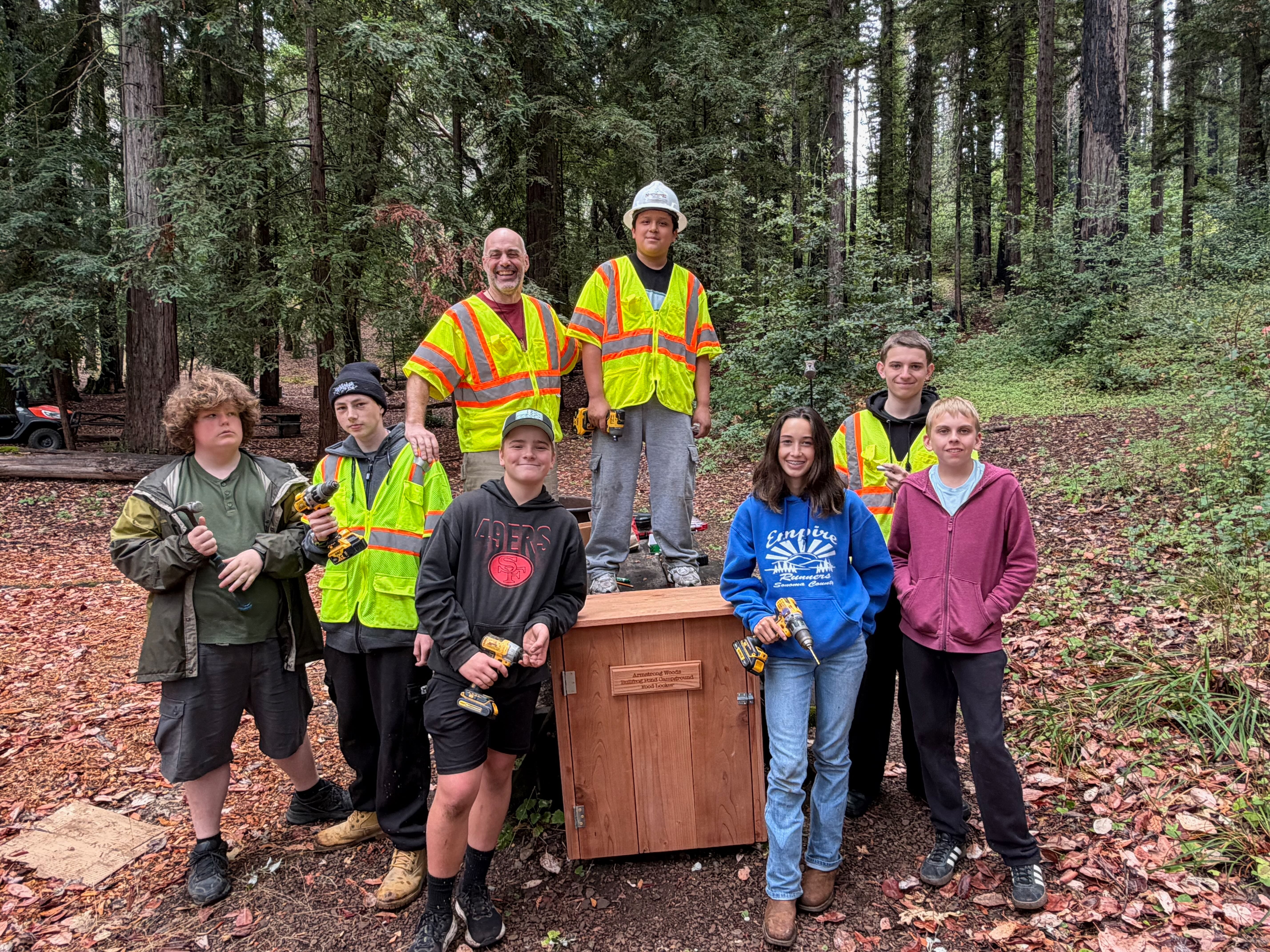
Last year, a group of students built food lockers (aka “bear boxes") for a campground at a State Park. This year, Cole Smith took the first-year students to the campground and together they installed five food lockers. It was pretty amazing tro be working out among the redwoods.
Mr. Z’s School Garden Project
The new math and science teacher, Jonathan Zidich, has taken on the school garden as a project for his students this year.
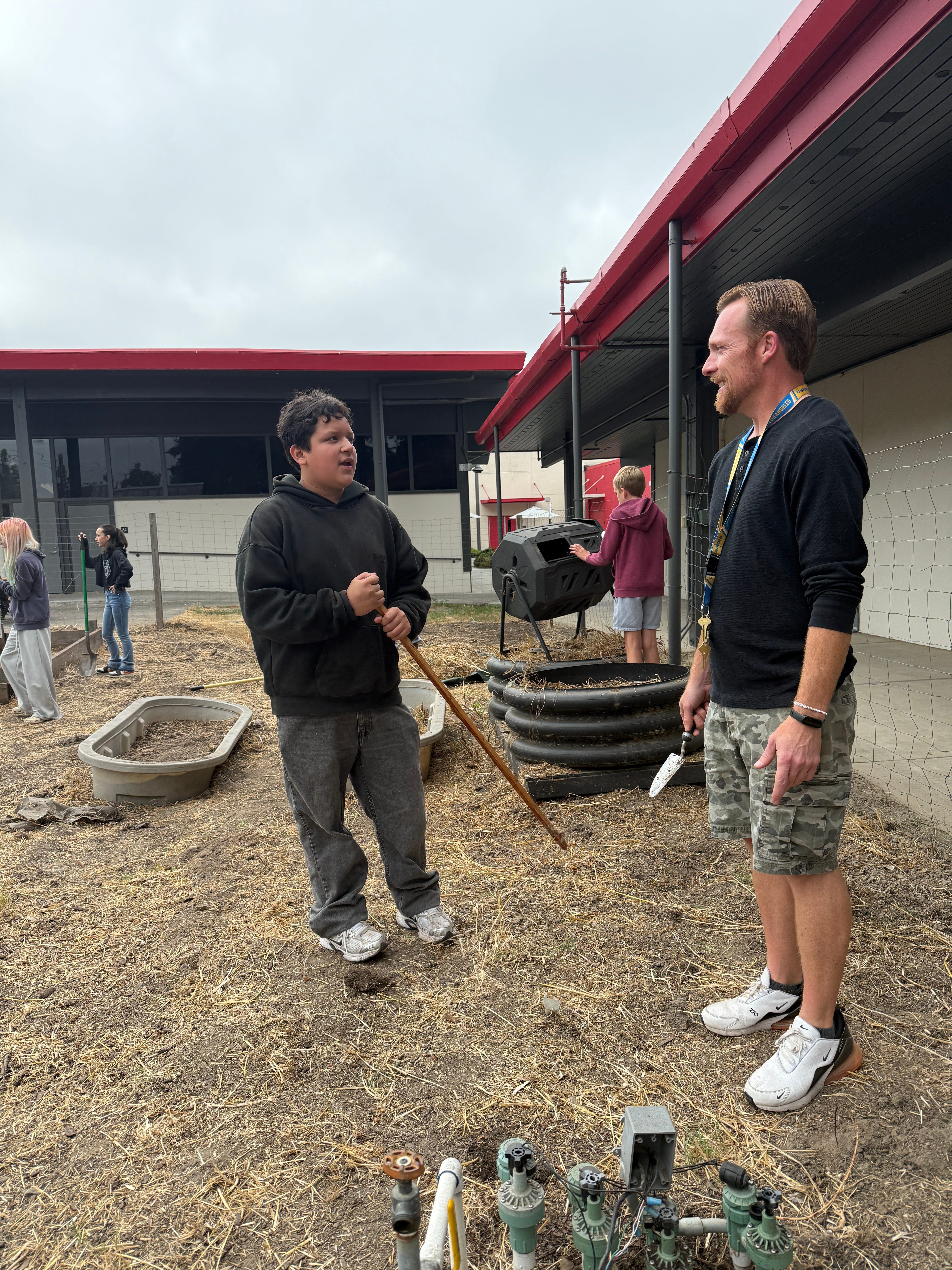
Working on the garden has been a great experience. All of the students have had a hand in the progress which started with the tedious process of weeding. We filled the compost bin to the brim and seeing the garbage truck drive away with all of the weeds was a great sight to see (he could barely empty the bin).
We then set our focus on the volume of materials we needed for the ground cover so we used our math and technology skills to find out how much ground cover (crushed granite) we needed. We used Google Earth to get a precise measurement of the overall area and then went out and measured the horse troughs and garden beds to get a precise volume of ground cover.
The students are split up into six different teams which include : 1) The art team has painted and decorated the horse troughs; 2) The structural team has repaired and dug various areas around the garden; 3) The weather team has warned us about upcoming trends in the weather; 4) The soil team has mixed in the compost and kept the soil tilled and ready to be planted; 5) The germination team has been planning the winter crops and is planting our first plants today; 6) The animal relocation team has researched what animals and insects we want in the garden and animals that we don’t and have come up with plans to maintain homeostasis in the garden.
— Jonathan Zidich
Building more models
I am working with this team (and others) to build this model while it is up and running. The prototype has become the product, which feels true to the Maker Way. We don’t have a detailed specification and we didn’t have a lot of time to plan everything out in advance. We are trying things out to see what works best for students.
It will take years to build this school but we have a model of how it works that anyone can see for themselves — and that feels like progress. If you walk into the space, you feel can what’s happening. Once you see the student in action, you get that it’s working for them.
Sarah Chung told me about a 10th student who had transferred from the larger high school. “He said that he really didn't like the big school and that he was skipping a lot of classes. After the cardboard chair challenge I asked him, "Do you think you might skip classes here?" He said "no, definitely not" and even offered to vacuum up after the activity was over.”
One school model that influenced me during development was Gibson-Ek High School in Issaquah, Washington, an alternative school that serves about 200 students. Julie Bamba was the founding principal and she shared her process with us and we got to see the school on a visit. They also built their program around a makerspace and made student-initiated projects central to their model.
Let me know if you are working on a new model school, or would like to talk about this new model.
It was fun working w/ the AIA 9th graders starting yesterday. I feel the same way you characterize the school - work in progress. But I’d rather be hands-on figuring out what works sitting with the kids than being on 100 committees writing 1,000 reports.
I also see the tension. Turns out the district blocks Scratch on their Chromebooks. Basically they block everything by default so i have to figure out how to whitelist it plus any other sites we use as we move onto Python and Gemini, etc.
Talking to Cole, I think there are potential connections between software building and physical building and whats going on in their other classes be it air balloons w/ GPS or gardens with soil sensors.
I wrote a little about it today - one kid’s enthusiasm was positively contagious; yet tempered by another kids boredom.
fun watching you with Sanjay!